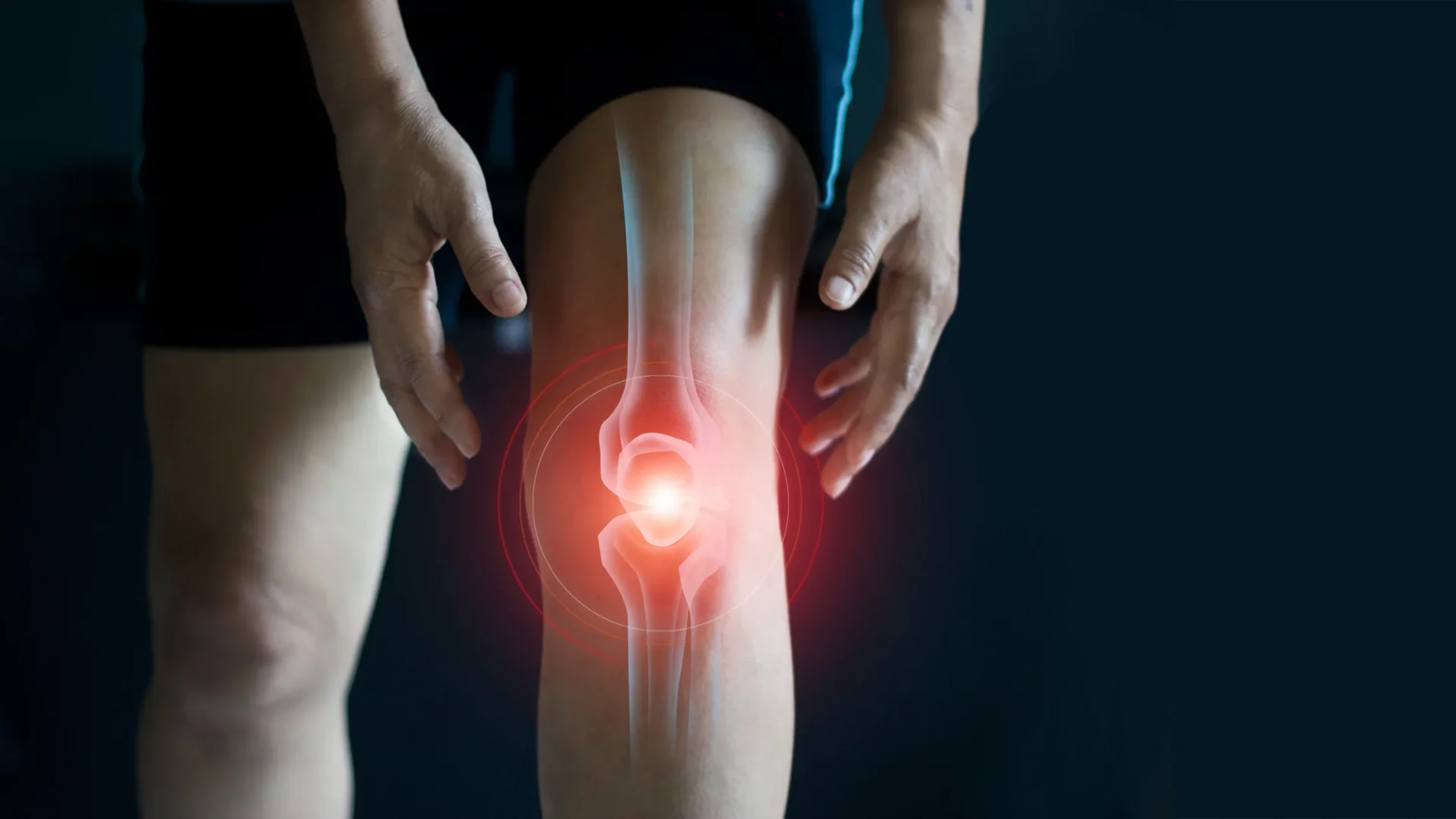
Osteoarthritis, also known as arthrosis, in the knee is a degenerative and progressive disease that does not primarily present as chronic inflammation in the knee joint. Wear and tear of the joint occur when the cartilage, which acts as a shock absorber between the bones, deteriorates, leading to pain in the joint structures. The pain is usually felt when bending the knee, climbing stairs, and also after sitting or lying down for extended periods. Morning pain is a common problem in the early stages of knee osteoarthritis. The joints feel stiff, and the pain usually decreases after the joint warms up. The worn joint can easily become inflamed. Osteoarthritis, which was initially non-inflammatory, can turn into active osteoarthritis with inflammatory phases. The goal of osteoarthritis treatment is to keep the inflammatory stages as short as possible using medication, thereby preventing pain.
Osteoarthritis (Arthrosis)
What is Osteoarthritis (Arthrosis)?
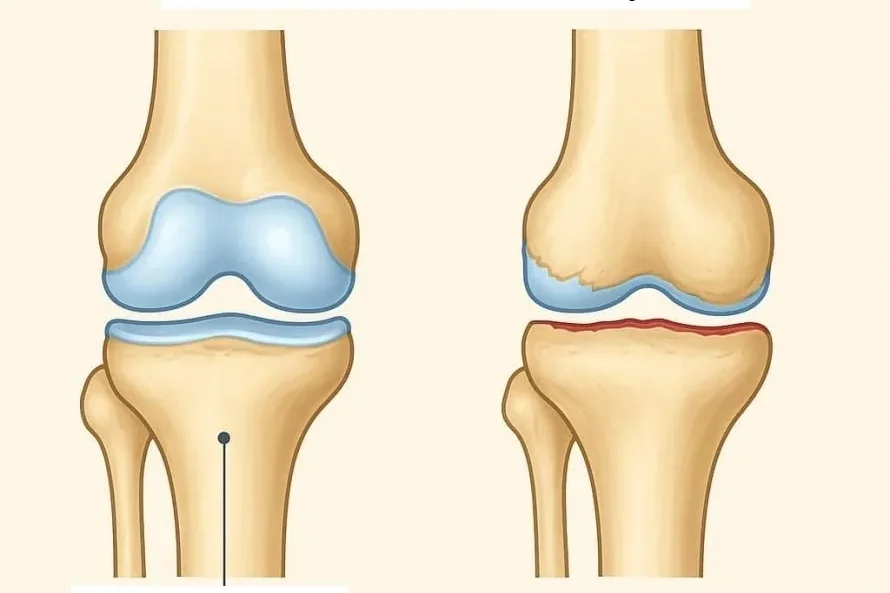
Three bones come together at the knee joint: the thigh bone (femur), the kneecap (patella), and the shinbone (tibia). Wear and tear and tearing of the joints always occur between the bony surfaces, each of which is covered by a smooth layer of cartilage. The joint between the femur and the tibia consists of two joint sections: the inner part and the outer part. This is why doctors refer to different parts of the knee.
Types of Knee Osteoarthritis
1. Inner Knee Osteoarthritis: If the inner part of the knee joint is affected by wear and tear, this is called inner knee osteoarthritis.
2. Lateral (Outer) Knee Osteoarthritis: If osteoarthritis is located on the outer side of the knee, it is called lateral osteoarthritis.
Osteoarthritis is the most common joint disease in adults worldwide. In Germany, hip osteoarthritis is very common, affecting more than half of women and one-third of men aged 60, and these numbers are increasing.
Types of Knee Osteoarthritis
1. Inner Knee Osteoarthritis: If the inner part of the knee joint is affected by wear and tear, this is called inner knee osteoarthritis.
2. Lateral (Outer) Knee Osteoarthritis: If osteoarthritis is located on the outer side of the knee, it is called lateral osteoarthritis.
Osteoarthritis is the most common joint disease in adults worldwide. In Germany, hip osteoarthritis is very common, affecting more than half of women and one-third of men aged 60, and these numbers are increasing.
Causes of Knee Osteoarthritis
Often, there is no specific cause for knee osteoarthritis: in most cases, it is "primary osteoarthritis" – resulting from age-related cartilage degeneration.
In addition, congenital deformities (such as bow legs or knock knees) and certain diseases or injuries can lead to wear and tear of the joints. These cases are referred to as "secondary osteoarthritis."
Symptoms and Signs of Knee Osteoarthritis
Common symptoms of osteoarthritis in the knee joint include:
Knee pain when climbing stairs and walking on uneven ground. The pain is especially unpleasant and severe when starting to move after long periods of rest, then gradually decreases, and recurs after extended periods of stress.
Symptoms increase after carrying heavy loads. During this period, significant swelling may be present. In advanced stages, sounds like crab walking and popping can be heard when moving the knee. The joint is very sensitive in damp and cold weather conditions. The more advanced the osteoarthritis, the more pronounced the symptoms become: pain increases and often occurs even at rest, and knee mobility decreases.
In addition, congenital deformities (such as bow legs or knock knees) and certain diseases or injuries can lead to wear and tear of the joints. These cases are referred to as "secondary osteoarthritis."
Symptoms and Signs of Knee Osteoarthritis
Common symptoms of osteoarthritis in the knee joint include:
Knee pain when climbing stairs and walking on uneven ground. The pain is especially unpleasant and severe when starting to move after long periods of rest, then gradually decreases, and recurs after extended periods of stress.
Symptoms increase after carrying heavy loads. During this period, significant swelling may be present. In advanced stages, sounds like crab walking and popping can be heard when moving the knee. The joint is very sensitive in damp and cold weather conditions. The more advanced the osteoarthritis, the more pronounced the symptoms become: pain increases and often occurs even at rest, and knee mobility decreases.

Stages of osteoarthritis: degrees of joint wear and tear
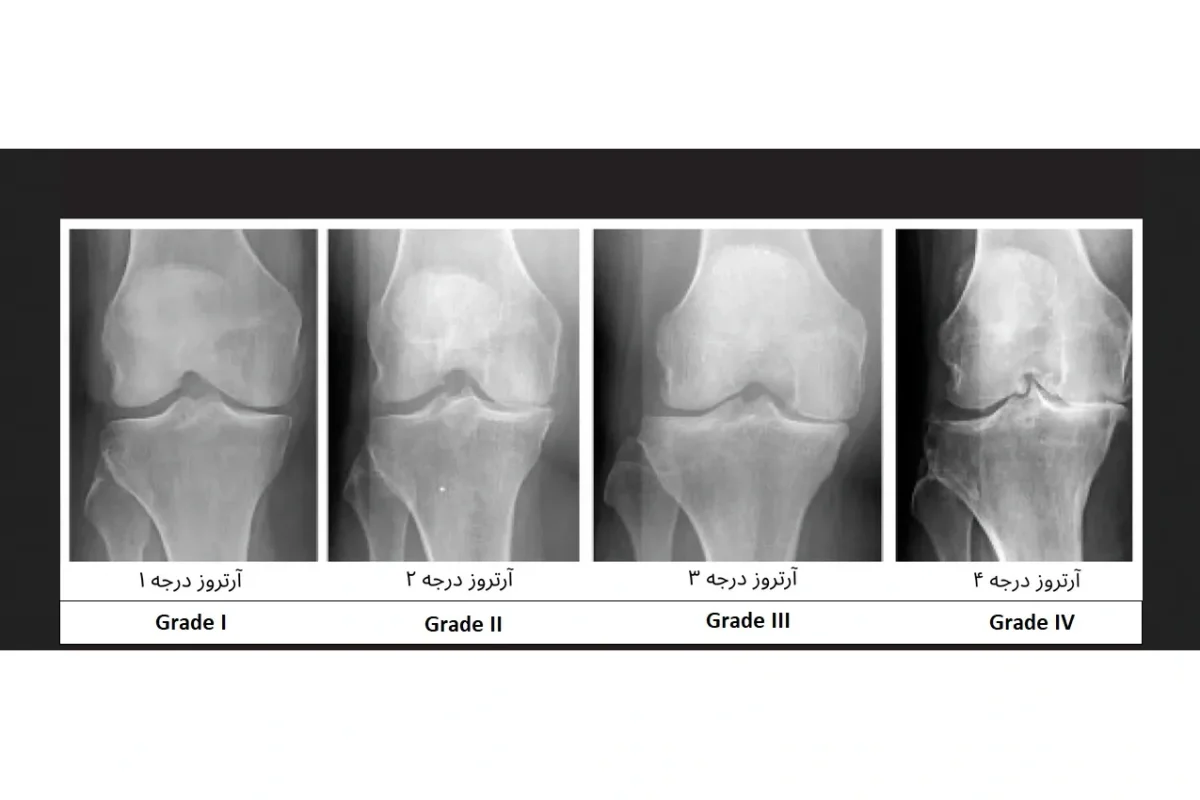
Depending on the amount of knee joint wear, there are four degrees of arthritis severity.
Grade 1: The cartilage layer in the knee is not damaged but is soft. The individual is still largely asymptomatic, and joint function is not yet impaired.
Grade 2: The first damage to the cartilage cell structure may have occurred, and the cartilage surface has become rough. Usually, in the early stages of knee osteoarthritis, there are no symptoms or functional impairments.
Grade 3: The cartilage surfaces are damaged. The first cracks form. The individual suffers from joint pain because the cartilage layer is deteriorating.
Grade 4: Loss of all cartilage: The exposed bone surfaces now rub against each other. This is known by specialists as Grade 4 chondromalacia. Wear in the knee joint causes stiffness and painful inflammation, swelling, and joint effusion.
Depending on the amount of knee joint wear, there are four degrees of arthritis severity.
Grade 1: The cartilage layer in the knee is not damaged but is soft. The individual is still largely asymptomatic, and joint function is not yet impaired.
Grade 2: The first damage to the cartilage cell structure may have occurred, and the cartilage surface has become rough. Usually, in the early stages of knee osteoarthritis, there are no symptoms or functional impairments.
Grade 3: The cartilage surfaces are damaged. The first cracks form. The individual suffers from joint pain because the cartilage layer is deteriorating.
Grade 4: Loss of all cartilage: The exposed bone surfaces now rub against each other. This is known by specialists as Grade 4 chondromalacia. Wear in the knee joint causes stiffness and painful inflammation, swelling, and joint effusion.
Risk Factors for Osteoarthritis:
1. Sports Injuries: Knee injuries, especially to the menisci and ligaments, can cause normal wear to begin earlier or accelerate the cartilage degradation process. Anterior cruciate ligament (ACL) tears are among the most common knee injuries.
The consequence of this injury is often instability of the knee joint, which in the long term can lead to increased cartilage wear (cartilage degeneration) and, consequently, osteoarthritis.
2. Lack of exercise: Physical activity is essential for cartilage nutrition. Since cartilage layers are not supplied with blood, metabolic products and nutrients can only be absorbed through movement.
3. Genetic factors: For example, people with leg misalignment, knock knees, leg length differences, or weak cartilage are more prone to developing osteoarthritis.
4. Heavy physical work: Symptoms of osteoarthritis can be observed in professions involving heavy labor; for example, tilers or construction workers.
5. Excessive sports activity: Professional athletes are exposed to high levels of stress, and as a result, significant cartilage wear and degeneration can be observed in these individuals.
6. Metabolic disorders: Changes in cartilage metabolism can also cause problems in supplying nutrients to the cartilage, which in turn leads to damage.
How Can Osteoarthritis Be Prevented?
Carrying excess weight over the years can damage the joints. This significantly increases the risk of developing osteoarthritis. The knee joint must bear a great deal of weight, meaning it wears out more quickly. Overweight begins at a BMI (Body Mass Index) of 25. A BMI above 30 is classified as obesity. Therefore, people with osteoarthritis are often advised to reduce their weight.
How to Improve Your Quality of Life
Patients with osteoarthritis can do many things to reduce pain and improve their treatment outcomes; for example, maintaining a healthy diet, achieving sustainable weight loss, and engaging in regular physical activity.
Proper Nutrition
Nutrition plays an important role in the development of osteoarthritis. Dietary changes cannot cure osteoarthritis, but they can have beneficial effects. That is why scientists today attach great importance to the relationship between osteoarthritis and nutrition.
1. Sports Injuries: Knee injuries, especially to the menisci and ligaments, can cause normal wear to begin earlier or accelerate the cartilage degradation process. Anterior cruciate ligament (ACL) tears are among the most common knee injuries.
The consequence of this injury is often instability of the knee joint, which in the long term can lead to increased cartilage wear (cartilage degeneration) and, consequently, osteoarthritis.
2. Lack of exercise: Physical activity is essential for cartilage nutrition. Since cartilage layers are not supplied with blood, metabolic products and nutrients can only be absorbed through movement.
3. Genetic factors: For example, people with leg misalignment, knock knees, leg length differences, or weak cartilage are more prone to developing osteoarthritis.
4. Heavy physical work: Symptoms of osteoarthritis can be observed in professions involving heavy labor; for example, tilers or construction workers.
5. Excessive sports activity: Professional athletes are exposed to high levels of stress, and as a result, significant cartilage wear and degeneration can be observed in these individuals.
6. Metabolic disorders: Changes in cartilage metabolism can also cause problems in supplying nutrients to the cartilage, which in turn leads to damage.
How Can Osteoarthritis Be Prevented?
Carrying excess weight over the years can damage the joints. This significantly increases the risk of developing osteoarthritis. The knee joint must bear a great deal of weight, meaning it wears out more quickly. Overweight begins at a BMI (Body Mass Index) of 25. A BMI above 30 is classified as obesity. Therefore, people with osteoarthritis are often advised to reduce their weight.
How to Improve Your Quality of Life
Patients with osteoarthritis can do many things to reduce pain and improve their treatment outcomes; for example, maintaining a healthy diet, achieving sustainable weight loss, and engaging in regular physical activity.
Proper Nutrition
Nutrition plays an important role in the development of osteoarthritis. Dietary changes cannot cure osteoarthritis, but they can have beneficial effects. That is why scientists today attach great importance to the relationship between osteoarthritis and nutrition.

Pay Attention to Your Diet and Weight
A study conducted in Australia examined the relationship between being overweight and developing knee osteoarthritis. Patients with a normal weight developed osteoarthritis only at an older age, whereas young, otherwise healthy but overweight patients showed cartilage loss at an earlier age.
Exercise
Exercise is valuable both for people who already have knee osteoarthritis and for those who want to prevent it. When experiencing pain, people often prefer to rest and try to move their knee as little as possible. This is exactly the wrong approach. Lack of exercise is one of the risk factors for osteoarthritis.
Targeted exercises for osteoarthritic joints strengthen the muscles and improve coordination. Movement increases the production of synovial fluid, which leads to reduced wear.
Which Sports Are Suitable for People with Osteoarthritis?
Beneficial sports with gentle movements:
Swimming
Water aerobics
Cycling
Golf
Cross-country skiing
Walking
Unsuitable sports:
Soccer
Alpine skiing
Tennis
Volleyball
Find the physical activity you enjoy most. Avoid strenuous exercise. If you are unsure whether you can participate in a particular sport, consult your doctor.
Therapeutic Measures – What Helps with Osteoarthritis?
Although osteoarthritis is not curable, various treatment options can relieve pain and make everyday life easier.
Orthopedic aids (such as insoles, supports, orthoses), physiotherapy or exercise therapy, magnetic field therapy, ultrasound therapy, electrical stimulation, shock wave therapy, occupational therapy, naturopathy (such as acupuncture, water aerobics), and medications (such as pain relievers and/or anti-inflammatory drugs).
Surgical Procedures
1. Procedures in Which the Affected Joint Is Preserved
Arthroscopy:
A treatment method that is rarely used for knee osteoarthritis. During arthroscopy, a small camera (endoscope) is inserted into the knee joint to obtain a clear view inside the joint and to determine appropriate therapeutic measures.
Osteotomy:
In an osteotomy, a piece of bone is either removed or added to correct deformities or osteoarthritic damage on one side of the knee joint. By correcting the leg axis, pressure on the damaged cartilage is reduced, thereby preventing further wear.
2. Procedures in Which the Joint Is Replaced
Partial Joint Replacement:
If only one side of the knee joint is affected by osteoarthritis, surgery may be possible. In partial joint replacement surgery, only the damaged or destroyed part of the knee joint is replaced with metal or plastic components. This procedure is also known as a partial knee replacement. The healthy side of the joint is preserved.
Total Joint Replacement (Total Knee Prosthesis):
This procedure is considered only if both sides of the knee surface are significantly damaged and the patient experiences severe pain that cannot be relieved by other treatments. During the operation, the damaged surfaces of the knee joint are replaced with metal and plastic components. These components are designed to match the anatomy of the knee joint as closely as possible.
A study conducted in Australia examined the relationship between being overweight and developing knee osteoarthritis. Patients with a normal weight developed osteoarthritis only at an older age, whereas young, otherwise healthy but overweight patients showed cartilage loss at an earlier age.
Exercise
Exercise is valuable both for people who already have knee osteoarthritis and for those who want to prevent it. When experiencing pain, people often prefer to rest and try to move their knee as little as possible. This is exactly the wrong approach. Lack of exercise is one of the risk factors for osteoarthritis.
Targeted exercises for osteoarthritic joints strengthen the muscles and improve coordination. Movement increases the production of synovial fluid, which leads to reduced wear.
Which Sports Are Suitable for People with Osteoarthritis?
Beneficial sports with gentle movements:
Swimming
Water aerobics
Cycling
Golf
Cross-country skiing
Walking
Unsuitable sports:
Soccer
Alpine skiing
Tennis
Volleyball
Find the physical activity you enjoy most. Avoid strenuous exercise. If you are unsure whether you can participate in a particular sport, consult your doctor.
Therapeutic Measures – What Helps with Osteoarthritis?
Although osteoarthritis is not curable, various treatment options can relieve pain and make everyday life easier.
Orthopedic aids (such as insoles, supports, orthoses), physiotherapy or exercise therapy, magnetic field therapy, ultrasound therapy, electrical stimulation, shock wave therapy, occupational therapy, naturopathy (such as acupuncture, water aerobics), and medications (such as pain relievers and/or anti-inflammatory drugs).
Surgical Procedures
1. Procedures in Which the Affected Joint Is Preserved
Arthroscopy:
A treatment method that is rarely used for knee osteoarthritis. During arthroscopy, a small camera (endoscope) is inserted into the knee joint to obtain a clear view inside the joint and to determine appropriate therapeutic measures.
Osteotomy:
In an osteotomy, a piece of bone is either removed or added to correct deformities or osteoarthritic damage on one side of the knee joint. By correcting the leg axis, pressure on the damaged cartilage is reduced, thereby preventing further wear.
2. Procedures in Which the Joint Is Replaced
Partial Joint Replacement:
If only one side of the knee joint is affected by osteoarthritis, surgery may be possible. In partial joint replacement surgery, only the damaged or destroyed part of the knee joint is replaced with metal or plastic components. This procedure is also known as a partial knee replacement. The healthy side of the joint is preserved.
Total Joint Replacement (Total Knee Prosthesis):
This procedure is considered only if both sides of the knee surface are significantly damaged and the patient experiences severe pain that cannot be relieved by other treatments. During the operation, the damaged surfaces of the knee joint are replaced with metal and plastic components. These components are designed to match the anatomy of the knee joint as closely as possible.