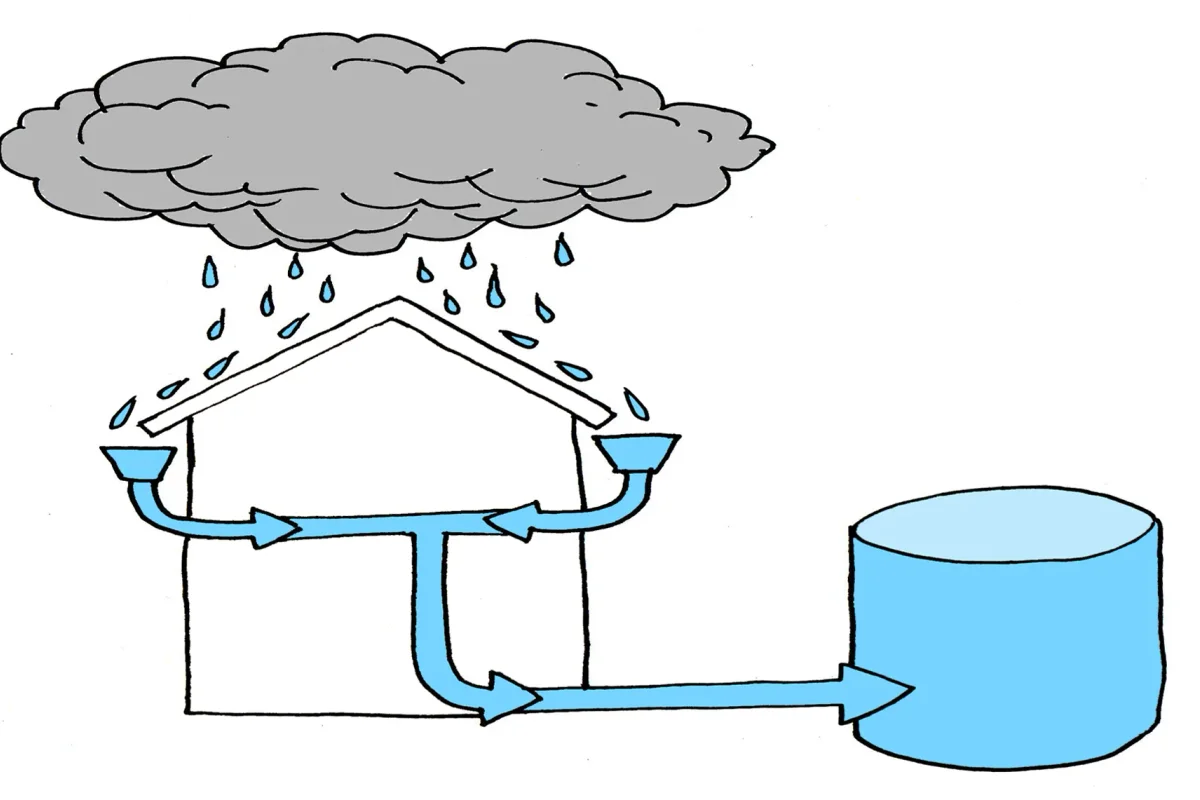
Rainwater harvesting is the collection of rainwater that falls on site (usually on rooftops). It is primarily used for irrigation, washing, or other uses, although it can also be used for drinking water if properly treated. Rainwater harvesting is a valuable way to reduce or even eliminate the use of municipal drinking water without requiring individuals to reduce their water consumption. This approach is, of course, more effective in rainy climates than in dry areas.

Rainwater harvesting
Rainwater harvesting systems are measured by the area of water collection (in square meters or square feet) and the volume of water storage (in liters or gallons).
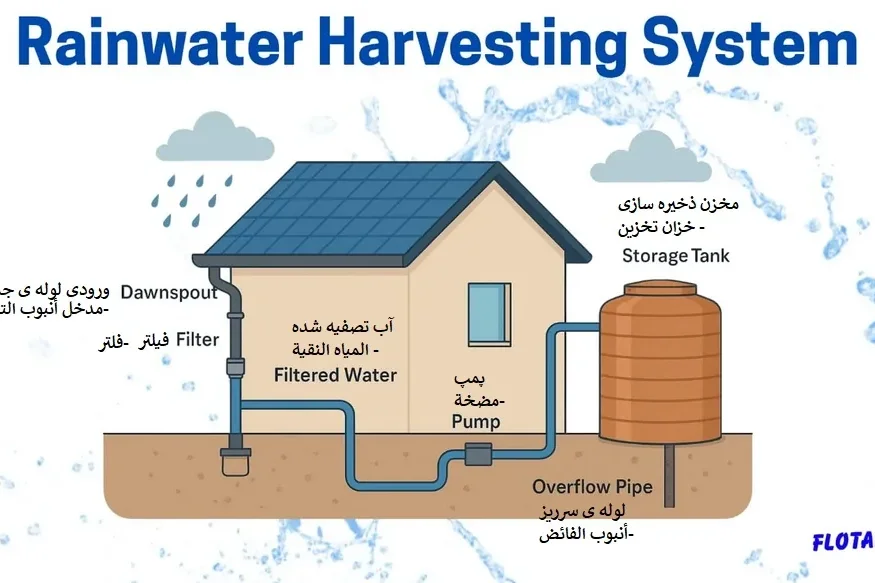
Simple rainwater harvesting systems have three main elements: a roof or other collection surface, a storage tank(s), and gutters and other piping that directs water from the collection surface to the tank. Advanced systems may use a pump to draw water from the tank to the point of use and may treat the water with additional devices such as filters and ultraviolet sterilizers.
Simple rainwater harvesting systems have three main elements: a roof or other collection surface, a storage tank(s), and gutters and other piping that directs water from the collection surface to the tank. Advanced systems may use a pump to draw water from the tank to the point of use and may treat the water with additional devices such as filters and ultraviolet sterilizers.
If rainwater is used for drinking or watering gardens, make sure the tank does not release toxins or encourage the growth of pathogens. For example, galvanized steel tanks lined with polyethylene or other food-grade liners are suitable.
If rainwater collected from the roof is used for drinking or watering gardens, make sure the roofing material does not release toxins. For example, asphalt shingles leach toxins into the water, while metal or slate roofs do not.
If rainwater collected from the roof is used for drinking or watering gardens, make sure the roofing material does not release toxins. For example, asphalt shingles leach toxins into the water, while metal or slate roofs do not.
Here you see an example of a rainwater harvesting system.